Proper sprinting form: a beginner’s guide to sprint technique
Good sprinting form isn’t one position. It changes from the first step to top speed. Here is what to aim for in each part of the run, the mistakes that slow most athletes down, and how to check your own.
Ask ten people what good sprinting form looks like and you will get ten answers, most of them describing one moment: a sprinter at full speed, upright, knees high. But a sprint has two very different parts. The first few seconds are about pushing. The rest is about staying fast. Good form looks different in each.
This guide covers the basics of both, the faults to fix first, and the drills that help. The numbers come from research on trained sprinters, so you can see what you’re aiming for, not just a list of cues.
Part 1: Acceleration form
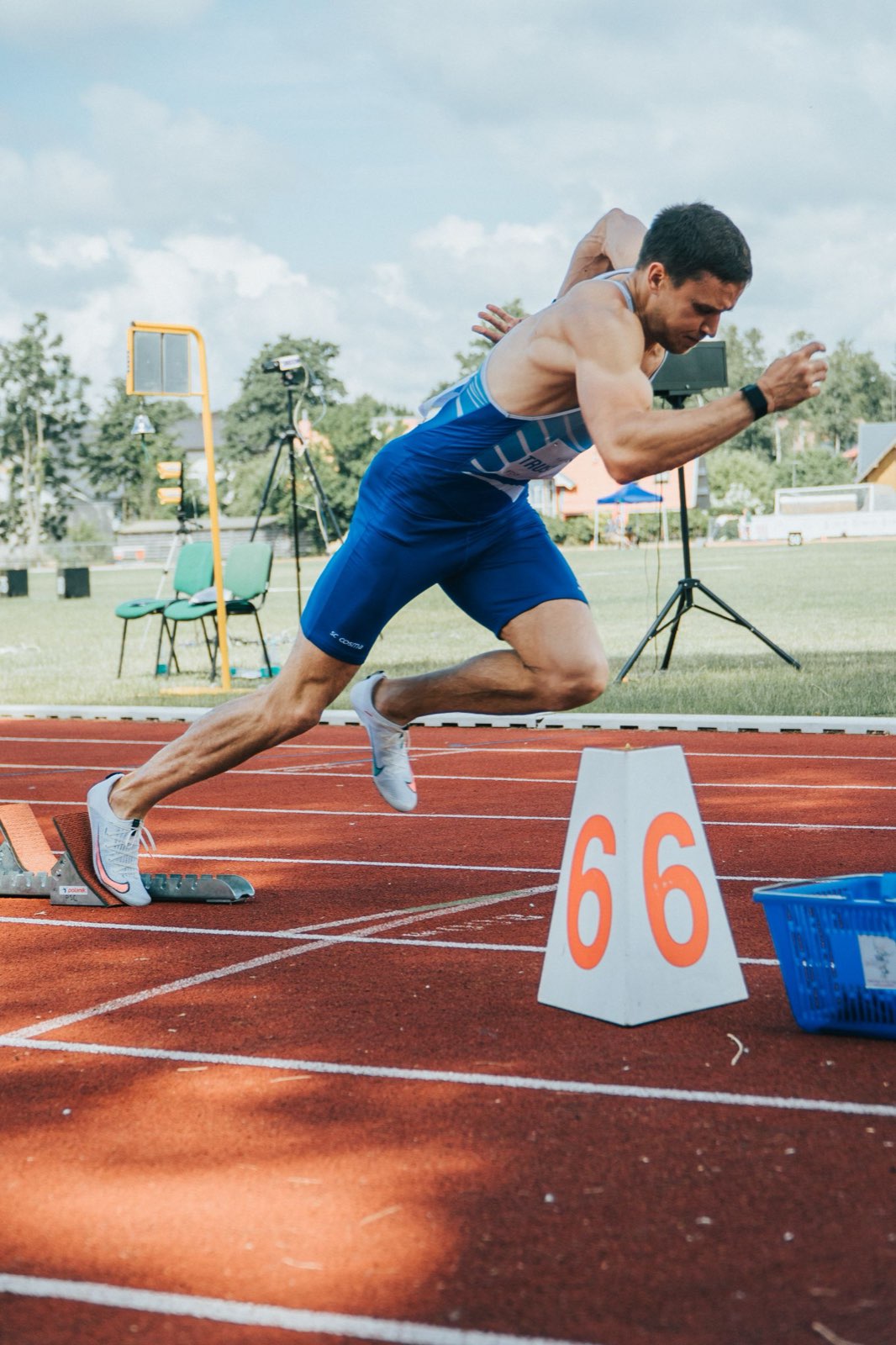
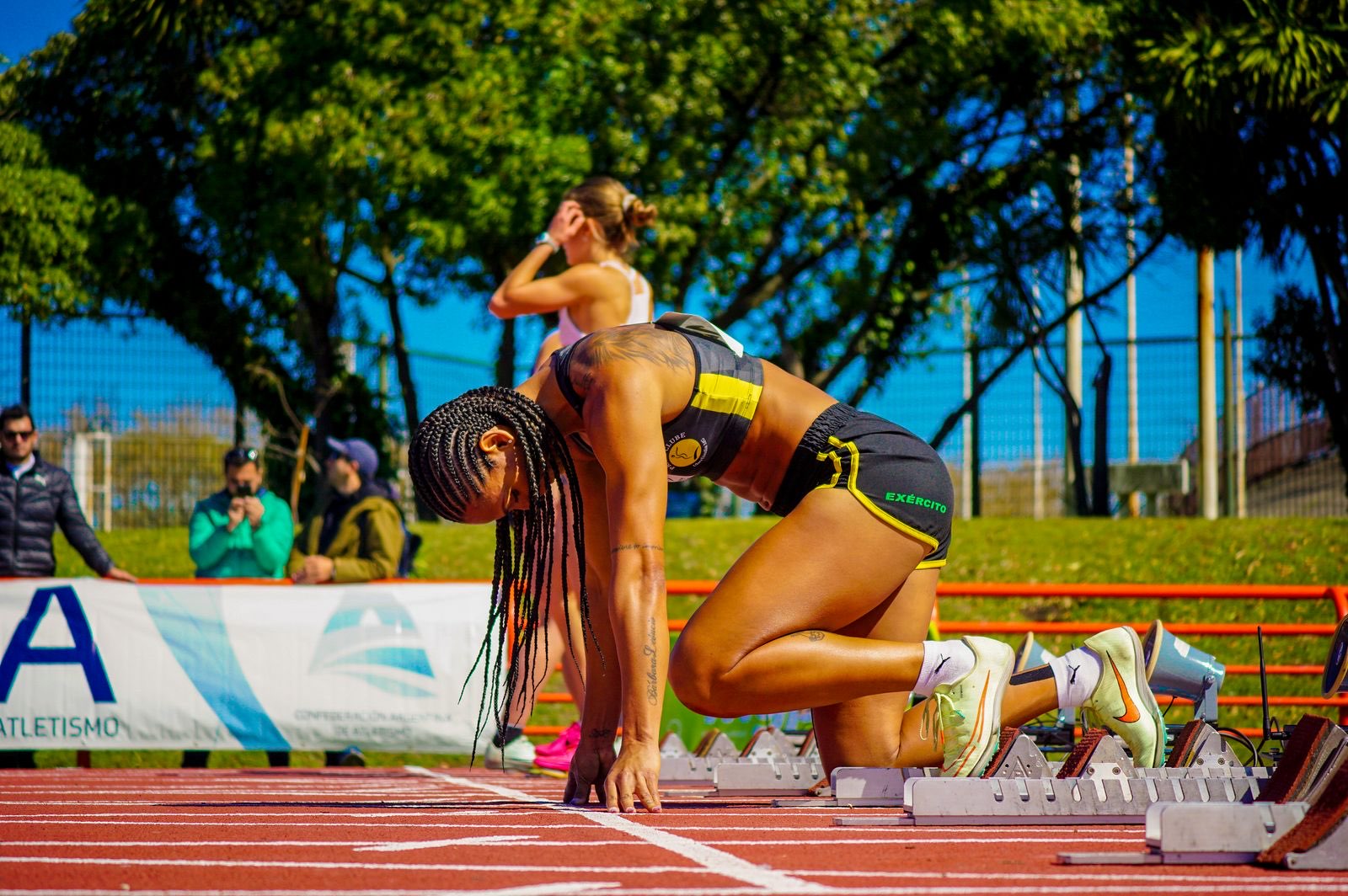
From blocks, a crouch or a standing start, the goal is horizontal force: pushing the ground backwards to move your body forwards. That only works if your body is inclined far enough forward for each push to point back rather than up.
- Forward lean in a straight line. Over the first few steps your body should be inclined at roughly 45° to the ground, with your head, shoulders, hips and the heel of the pushing leg in one line. The lean comes from the whole body inclining, not from bending at the waist. If your hips sit behind your shoulders, you’ve broken at the waist and lost the line.
- Positive shin angles. As each foot lands, the knee should be ahead of the ankle, with the shin angled forward at around 45–55° to the ground. That lets you push back through the whole contact. Land with an upright shin and the force goes up instead, which is why athletes with vertical shins pop up early.
- Full extension. Push until the hip, knee and ankle are fully extended behind you (triple extension), then bring the leg through low and fast. In the first steps the foot recovers low and lands just under or slightly behind the hips.
- A gradual rise. Your body angle should open up a little with every step, so you’re upright after roughly 20–30 m. Standing up within two or three steps is the most common acceleration fault, and it usually comes from upright shins or a set position with the hips too low.
- Long, powerful arms. Out of the start the arms swing through a big range, with the elbow opening up on the back swing, to balance the force coming from the legs. They shorten towards 90° as you get upright.
More detail, with drills: sprint acceleration technique.
Part 2: Top-speed form
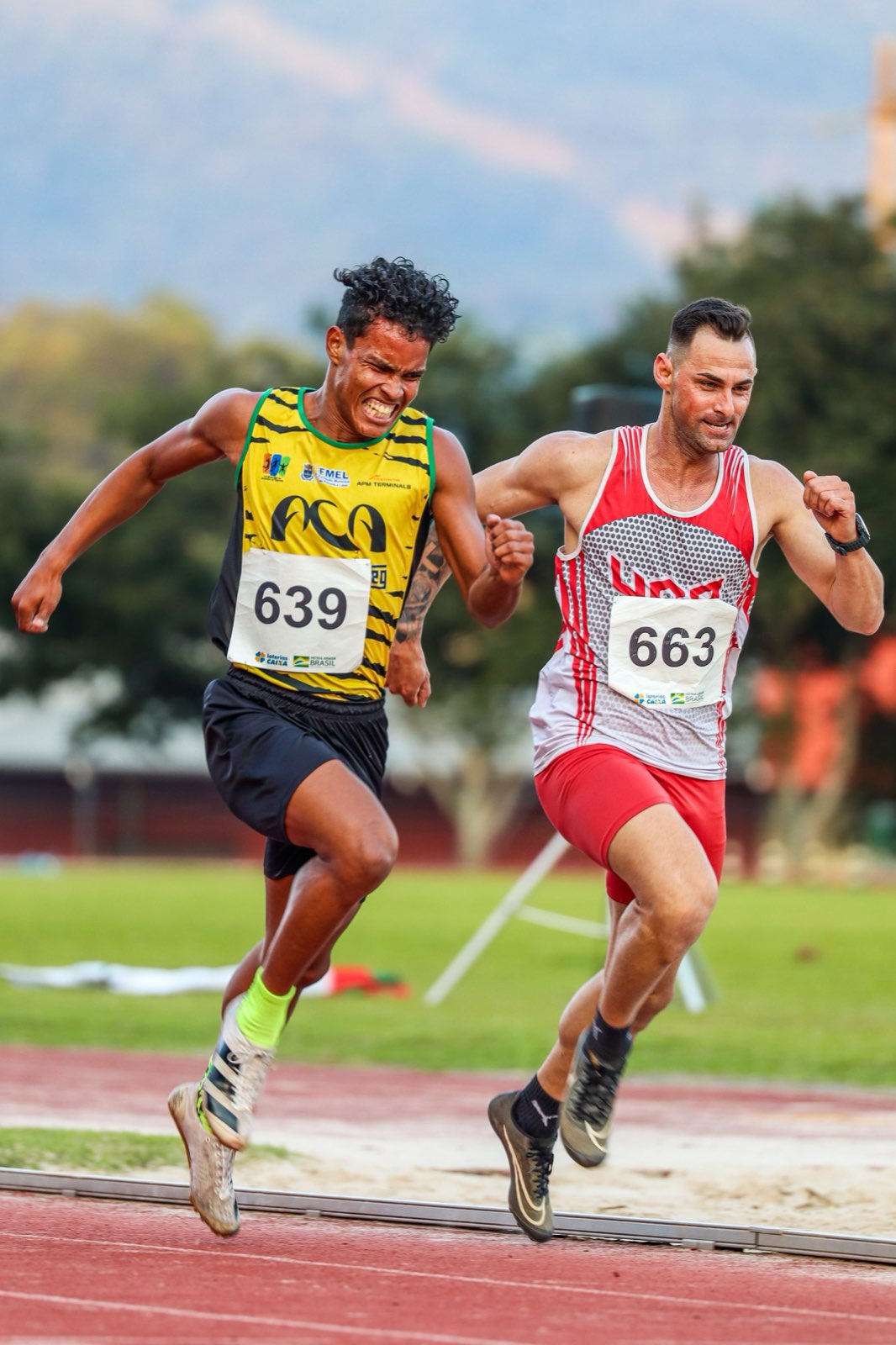
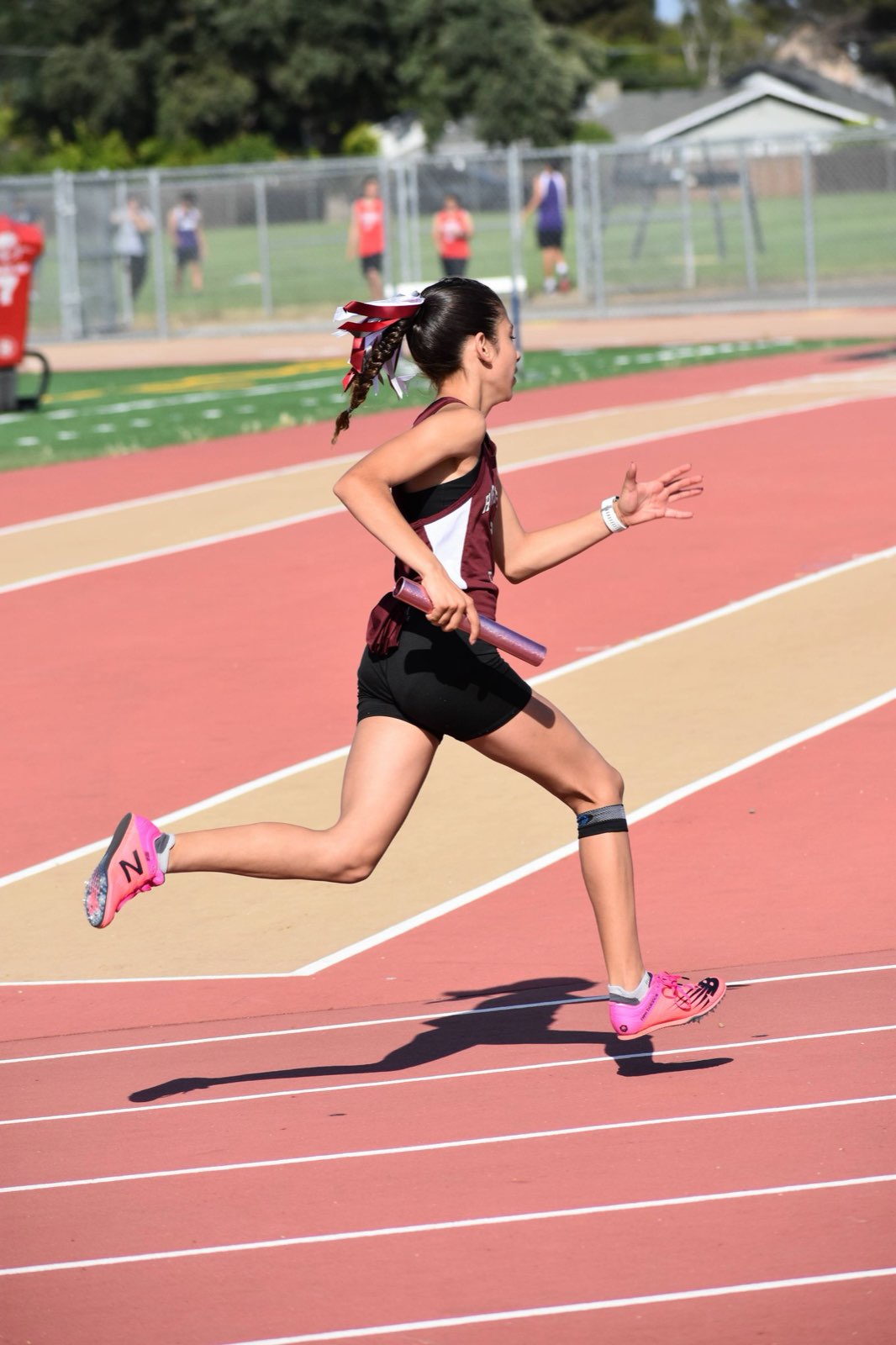
Once you’re upright, the aim shifts from pushing to applying as much force as possible in a very short ground contact: under a tenth of a second in elite sprinters. Good top-speed form puts your body in a position to do that on every step.
- Tall posture. Trunk close to vertical, within about 5° for senior sprinters, with the hips high and the pelvis level. Sitting back, with the hips behind you and a slight bend at the waist, pushes the foot strike further in front and shortens the swing.
- Strike under your centre of mass. The foot should land close to underneath the hips, with the shin near vertical at touchdown. A foot landing out in front of the knee (overstriding) creates a braking force on every contact. The leg strikes down and back onto the track; it doesn’t reach for it.
- Dorsiflexed ankle, stiff leg. Hold the ankle dorsiflexed, toes pulled up towards the shin, as the foot comes down, so you land on the ball of the foot with a stiff ankle instead of letting the heel sink. The knee is only slightly bent at touchdown, about 150° in fast sprinters, and shouldn’t collapse through contact. That stiffness is what makes the contact short and elastic.
- Front-side mechanics. As the leg recovers, the heel folds up under the hips and the thigh comes through high, to just below horizontal at its peak. Most of the leg action happens in front of your body rather than behind it, and a short, folded swing leg recovers faster.
- Arms at about 90°. Elbows held near a right angle, driving back hard from the shoulder, hands travelling roughly from hip height to chin height. Arms crossing the midline rotate the shoulders, and the hips follow.
- A relaxed upper body. Loose face, jaw, shoulders and hands. Tension in the neck and shoulders restricts the arm swing and tends to tighten everything else.
More detail, with drills: max velocity sprinting.
Common sprinting mistakes and fixes
| Mistake | How to spot it | Fix |
|---|---|---|
| Overstriding | Foot lands ahead of the knee, with the shin angled back at touchdown | Cue “strike down and back under the hips”. Wicket runs. |
| Popping up | Upright within 2–3 steps; upright shins at touchdown | Cue “push the ground away”. Wall drills, falling starts. |
| Sitting back | Hips behind the body and a bend at the waist at speed | Cue “run tall, hips up”. A-skips with a tall posture. |
| Arms crossing the body | Hands cross the midline; shoulders rotate | Drive the elbows straight back from the shoulder, hands travelling from hip height to chin height without crossing the midline. Arm swings at sprint rhythm, seated or standing. |
| Tension | Raised shoulders, clenched fists, tight face | Cue “loose jaw, loose hands”. Practise relaxing on build-up runs. |
| Low knee lift | Thigh stays low; the swing leg recovers long and low behind the body | A-marches and A-skips. Cue “step over the opposite knee”. |
Five drills that cover the basics
- Wall drill: rehearses the acceleration position and positive shin angles without any speed.
- A-march, then A-skip: front-side mechanics and striking down under the hips.
- Dribbles: fast heel recovery and quick, low contacts with a dorsiflexed ankle.
- Pogo jumps: ankle stiffness, for short, elastic ground contacts.
- Wicket runs: mini-hurdles spaced to your step length, to clean up overstriding at speed.
Drills teach the shapes, but only sprinting makes them fast. Use them as part of the warm-up, then sprint with one cue in mind.
Is good form the same for everyone?
The principles are, the details aren’t. Leg length, strength and mobility all change how your best form looks. Research also shows some sprinters rely more on longer steps and others on quicker ones (see how to increase stride length and frequency). Use the numbers here as ranges to check against, not a pose to copy.
How to check your own form
You can’t feel most of these things while you sprint. You can see them on video. Film a rep side-on, with your whole body in shot and the phone held level (how to film and analyse a sprint), and look at one phase at a time.
SprintVision, a sprint analysis app for iPhone, does this for you: it tracks your whole body on every step, measures your body lean, shin and knee angles, arm swing and step rate, and rates them against the research targets in this guide, with a cue for anything outside the range.
Sources
- Australian Athletics, “Long-term development of sprinters”: sprint technique targets by phase.
- “Kinematics of maximal speed sprinting with different running speed, leg length, and step characteristics”, Frontiers in Sports and Active Living, 1:37, 2019.
- Salo, A. I. T. et al. (2011). “Elite sprinting: are athletes individually step-frequency or step-length reliant?”, Medicine & Science in Sports & Exercise.
Common questions
What is proper sprinting form?
In acceleration: the body inclined at roughly 45°, a straight line from head to the heel of the pushing leg, positive shin angles at touchdown and full extension through each push, rising gradually over 20–30 m. At top speed: a tall posture, the foot striking close under the hips with the ankle dorsiflexed, a stiff leg through a short contact, the heel folding up under the hips and the thigh coming through high. Arms swing from the shoulder with the elbows near 90°.
What are the most common sprinting mistakes?
Overstriding (the foot landing out in front of the knee and hips, which brakes every step), standing up too early out of the start, sitting back or breaking at the waist at top speed, arms crossing the body, and tension in the shoulders, neck and face.
Should you run on your toes when sprinting?
Sprinters land on the ball of the foot with the ankle dorsiflexed, not up on their toes, and the heel often touches the ground lightly during contact. What matters more is where the foot lands: close under the hips, not out in front.
How can I improve my sprinting form?
Pick one fault at a time, use a drill that targets it (wall drills for acceleration posture, A-skips for knee lift, wicket runs for overstriding), then sprint with that one cue. Film side-on before and after a few weeks to check it has carried into your running.
See your own numbers.
Film one rep on your iPhone. SprintVision measures every step and rates your positions against these targets, with a cue for anything outside the range.
 Free trial
iPhone