Max velocity sprinting: mechanics, technique and drills
At top speed each step lasts about a fifth of a second. Here is what fast sprinters do in that time, the numbers behind it, and the drills that build it.
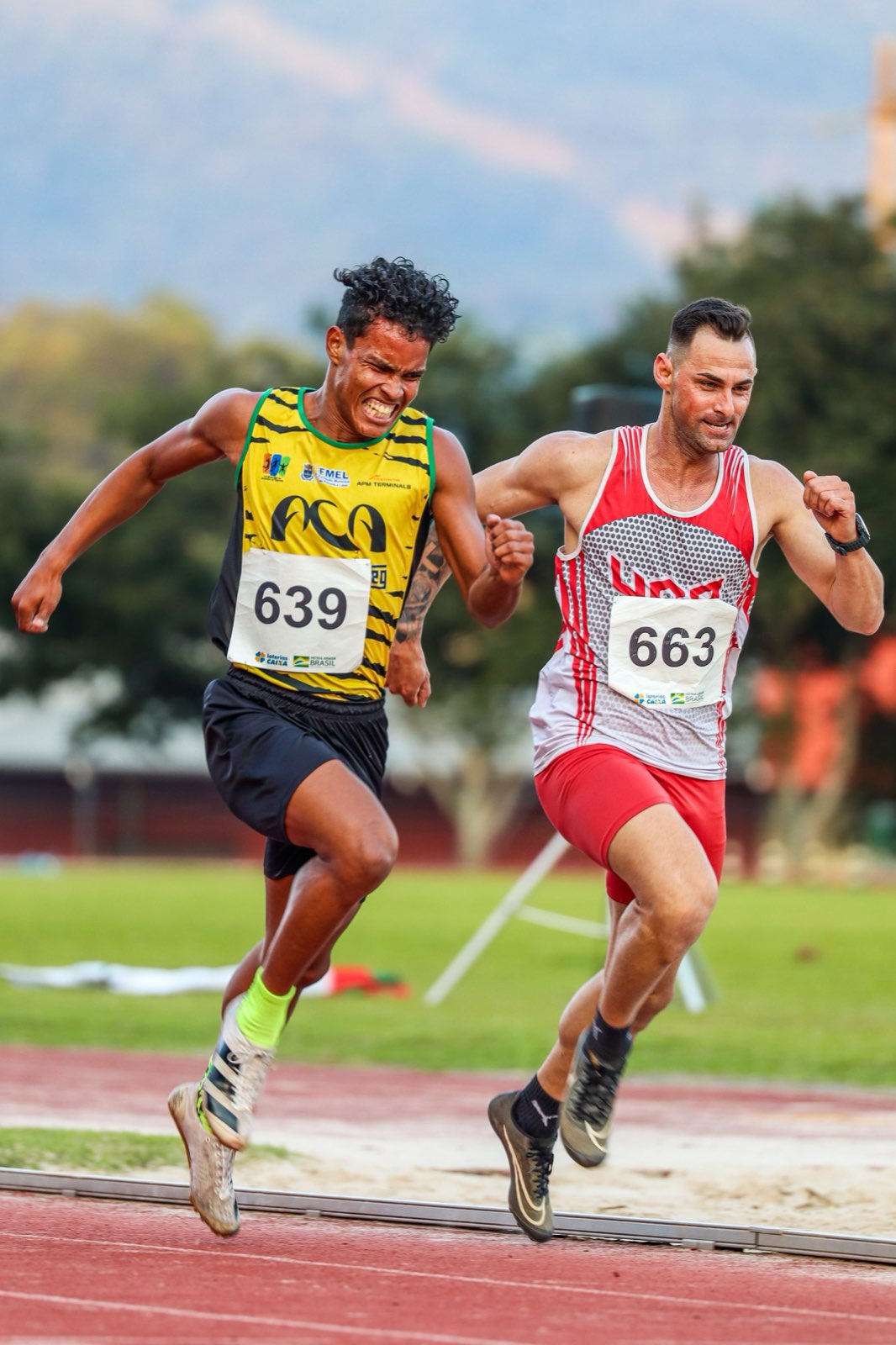
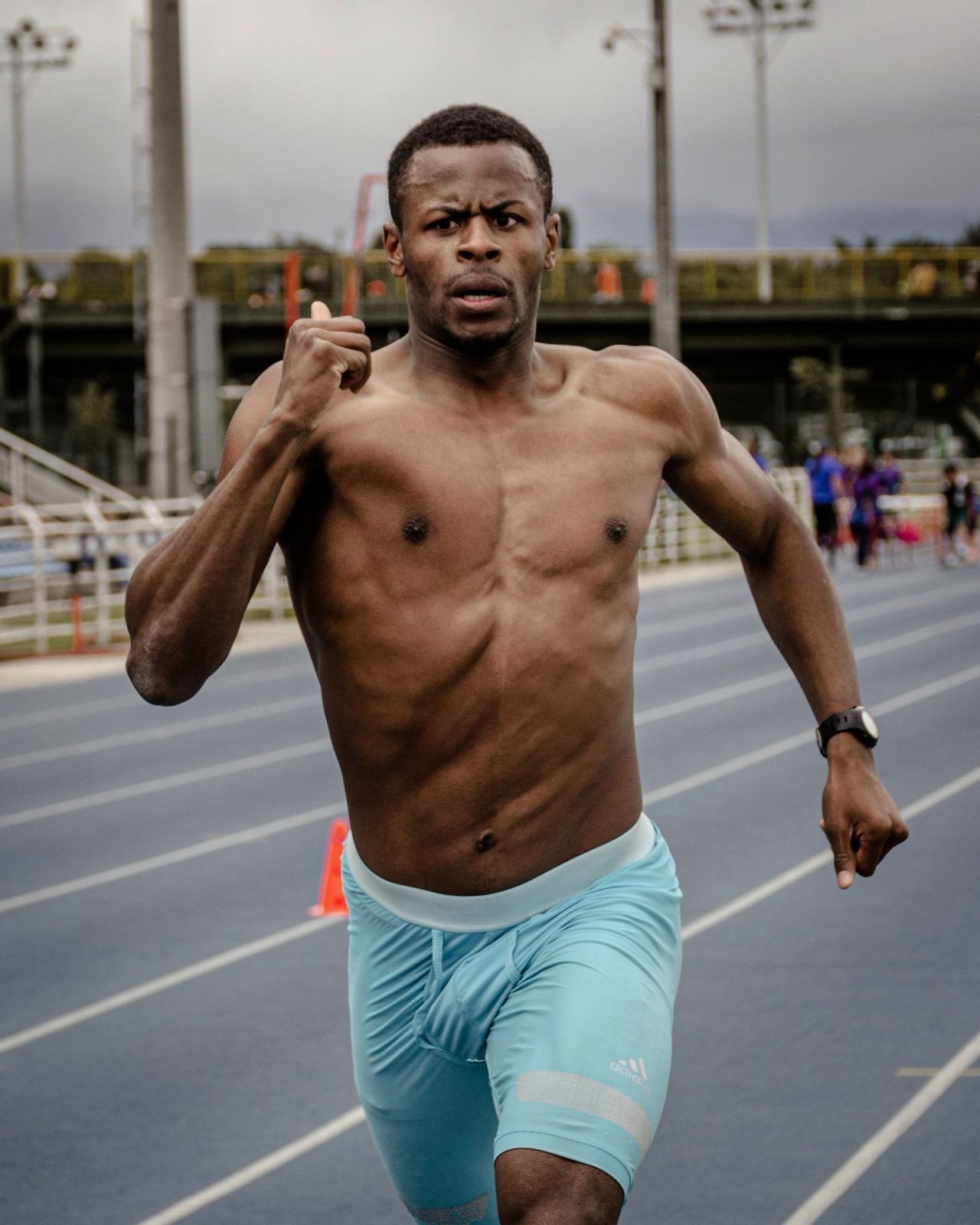
Once you’re upright, the job changes. You’re no longer building speed through long pushes; you’re applying as much force as possible in a ground contact that lasts under a tenth of a second in elite sprinters. Each step takes about a fifth of a second in total. The positions you hit in that time decide how much of your force moves you forward and how much is lost to braking.
Most of the numbers here come from a 2019 study in Frontiers in Sports and Active Living that measured sprinters at full speed, averaging 9.9 m/s, and looked at how their mechanics changed with running speed, leg length and step characteristics.
Posture
At top speed the trunk should be close to vertical: 0–5° of forward lean for senior sprinters, 5–10° for sub-elite. The hips stay high and the pelvis level. Sitting back, with the hips behind you and a slight bend at the waist, moves the foot strike further in front of the body and shortens the swing. Leaning back does the same.
When you check posture on video, hold the phone level. A tilted phone can add a few degrees in either direction.
Touchdown: where speed is lost
Strike under your centre of mass
The foot should land close to underneath the hips, with the shin near vertical at touchdown; in fast sprinters it’s about 5° past vertical. A foot that lands out in front of the knee, with the shin angled back, is overstriding. That step lands ahead of your centre of mass, so the first part of every contact is a braking force you then have to push through. It’s one of the most common faults in developing sprinters.
Cue: “Strike down and back, under the hips.” Drill: wicket runs, with mini-hurdles spaced to your step length.
Dorsiflexed ankle, stiff knee
Fast sprinters hold the ankle dorsiflexed, toes pulled up towards the shin, as the foot comes down, so they land on the ball of the foot with the ankle already stiff. The knee is only slightly bent at touchdown, about 152°, and gives very little through contact. Together that makes the leg behave like a stiff spring: it takes several times body weight and returns it quickly instead of absorbing it.
A knee much more bent at touchdown, under about 145°, collapses on contact and you sink. A knee close to straight, over about 160°, usually means the foot is reaching forward.
Cue: “Stiff, active leg.” Drill: pogo jumps and straight-leg bounds.
Front-side mechanics
Thigh drive
At its highest, the swing thigh reaches about 70° from vertical in sprinters at 9–11 m/s, just below horizontal. Coaches call this front-side mechanics: most of the leg action happens in front of the body, so the foot is high and ready to strike down. A thigh that only reaches 55–60° usually goes with a long, low swing and a foot strike out in front.
Heel recovery
As the foot leaves the ground, the heel folds up under the hips. At top speed, sprinters close the knee to about 32° at its tightest. A tighter fold shortens the swing leg, so it recovers faster. In novice sprinters it ranges from about 32° to 49°.
Keep it in proportion
Front-side mechanics are among the most coached features of sprinting, but research by Haugen and colleagues (2018) found that once sprinters were at speed, neither front-side nor back-side measures clearly separated faster from slower trained sprinters. Use thigh drive and heel recovery to spot clear problems, not as the main thing to chase. For a structured video screen built around hamstring injury risk, see the Sprint Mechanics Assessment Score.
Arm action
At top speed the elbows stay near 90°, opening slightly on the back swing, with the drive coming from the shoulder. Faster sprinters move the upper arm through a bigger range: in Ralph Mann’s analysis of 200 m finalists, about 135° against about 118° for slower sprinters. Long, straight arms swing slowly; arms held too tightly bent swing short.
Step rate
Sprinters at 9–11 m/s take about 4.6 steps per second. But the classic study on what limits top speed (Weyand and colleagues, 2000) found that faster runners don’t reposition their legs much faster through the air. They apply more force to the ground in a shorter contact. Turnover comes from force, not from trying to move your legs quickly. More on this in how to increase stride length and frequency.
Top-speed numbers at a glance
| Measure | Sprinters at 9–11 m/s | Good range |
|---|---|---|
| Trunk lean from vertical | 0–5° (senior), 5–10° (sub-elite) | 0–8° |
| Knee angle at touchdown | 152 ± 6° | 145–160° |
| Shin at touchdown | 5 ± 3° past vertical | 88–100° to the ground |
| Peak thigh drive from vertical | 70 ± 5° | 65–85° |
| Tightest swing knee (heel recovery) | 32 ± 6° | 40° or less |
| Step frequency | 4.6 ± 0.2 steps/s | 4.4 steps/s or more |
| Elbow angle | About 90° | 75–115° |
The good ranges are the ones SprintVision uses to rate upright running, roughly the average plus or minus one standard deviation of these groups.
Max velocity drills
Each drill isolates one part of the top-speed action, so you can rehearse it at a speed where you can control it.
| Drill | What it trains | Key cue |
|---|---|---|
| A-march and A-skip | Thigh drive and front-side mechanics | “Step over the opposite knee” |
| Dribbles | Heel recovery and striking under the hips | “Heel to hip, foot down under you” |
| Straight-leg bounds | A stiff leg at touchdown | “Paw the ground back” |
| Pogo jumps | Ankle stiffness and short contacts | “Toes up, minimal ground time” |
| Wicket runs | Rhythm, posture and cleaning up overstriding | “Run tall, strike down” |
For wicket runs, place mini-hurdles or flat markers in a line, spaced roughly to your step length at speed, and run over them at close to full speed. The spacing forces the foot to strike under your body.
Drills teach the positions, but only sprinting at full speed makes them automatic. What matters is whether the foot still strikes under your hips in a flying run, not just in drills.
How to check your top-speed mechanics
Film a flying run side-on, or follow the athlete with the camera, with the whole body in shot and the phone held level. Normal-speed video is enough for these angles. See the filming guide.
SprintVision measures each of these positions on every step, rates them against the ranges above and tells you what to work on, with a drill or cue for anything outside the range.
Sources
- “Kinematics of maximal speed sprinting with different running speed, leg length, and step characteristics”, Frontiers in Sports and Active Living, 1:37, 2019.
- Australian Athletics, “Long-term development of sprinters”: sprint technique targets by phase.
- Haugen, T. et al. (2018). “On the importance of ‘front-side mechanics’ in athletics sprinting”, International Journal of Sports Physiology and Performance.
- Weyand, P. G. et al. (2000). “Faster top running speeds are achieved with greater ground forces not more rapid leg movements”, Journal of Applied Physiology.
- Mann, R. The Mechanics of Sprinting and Hurdling.
Common questions
What are the best max velocity sprint drills?
A-marches and A-skips for front-side mechanics, dribbles for fast heel recovery and striking under the hips, straight-leg bounds and pogo jumps for leg and ankle stiffness, and wicket runs over mini-hurdles spaced to your step length. Then flying sprints, which are the most specific max velocity work of all.
What is good sprint technique at top speed?
At maximal velocity, good sprinters run tall (trunk 0–5° from vertical for seniors), strike the ground close under their centre of mass with the shin about vertical and the ankle dorsiflexed, keep the knee slightly bent at touchdown (about 152°) and stiff through contact, drive the thigh to about 70° from vertical and fold the heel up under the hips. Elbows stay near 90°.
What is overstriding in sprinting?
Overstriding is the foot landing well out in front of the knee and hips. You can see it as a shin angled backwards at touchdown and a nearly straight knee. Because the foot lands ahead of the centre of mass, every contact starts with a braking force. The fix is to strike down and back under the hips, not to shorten your steps on purpose.
How many steps per second do elite sprinters take?
Sprinters running about 9–11 m/s take around 4.6 steps per second (± 0.2). The fastest sprinters in the world reach close to 5 steps per second.
See your own numbers.
Film one rep on your iPhone. SprintVision measures every step and rates your positions against these targets, with a cue for anything outside the range.
 Free trial
iPhone