Sprint start without blocks: 3-point, 4-point and standing starts
Most sprints in training, testing and team sports start without blocks. Here is how to set up each kind of start, which one to choose, and how to make the first steps count.

Blocks are for races. Most sprints happen without them: in training, in speed tests like the 40-yard dash or 30 m sprint, and in every team sport. A good start without blocks can save as much time as a good block start, and the technique is easier to learn than most athletes think.
The three ways to start without blocks
| Start | Hands | Best for |
|---|---|---|
| 3-point start | One hand on the ground | Speed tests, sprint training, American football |
| 4-point start | Both hands on the ground | Practising block-start positions without blocks |
| Standing (2-point) start | None | Team sports, beginners, repeatable testing |
How to do a 3-point start
- Feet: stand with your feet hip-width apart just behind the line. Step one foot back so its toes are roughly level with the heel of the front foot. Most athletes put their stronger leg in front.
- Crouch: bend down until the front knee is well bent and the back knee is just off the ground.
- Hand: place the hand opposite your front foot on the ground just behind the line, fingers spread on the ground or on your knuckles. The other arm goes back, ready to swing through.
- Weight: lift the hips slightly and shift your weight forward over the hand and the front leg. You should feel that if the hand were taken away, you would fall forward.
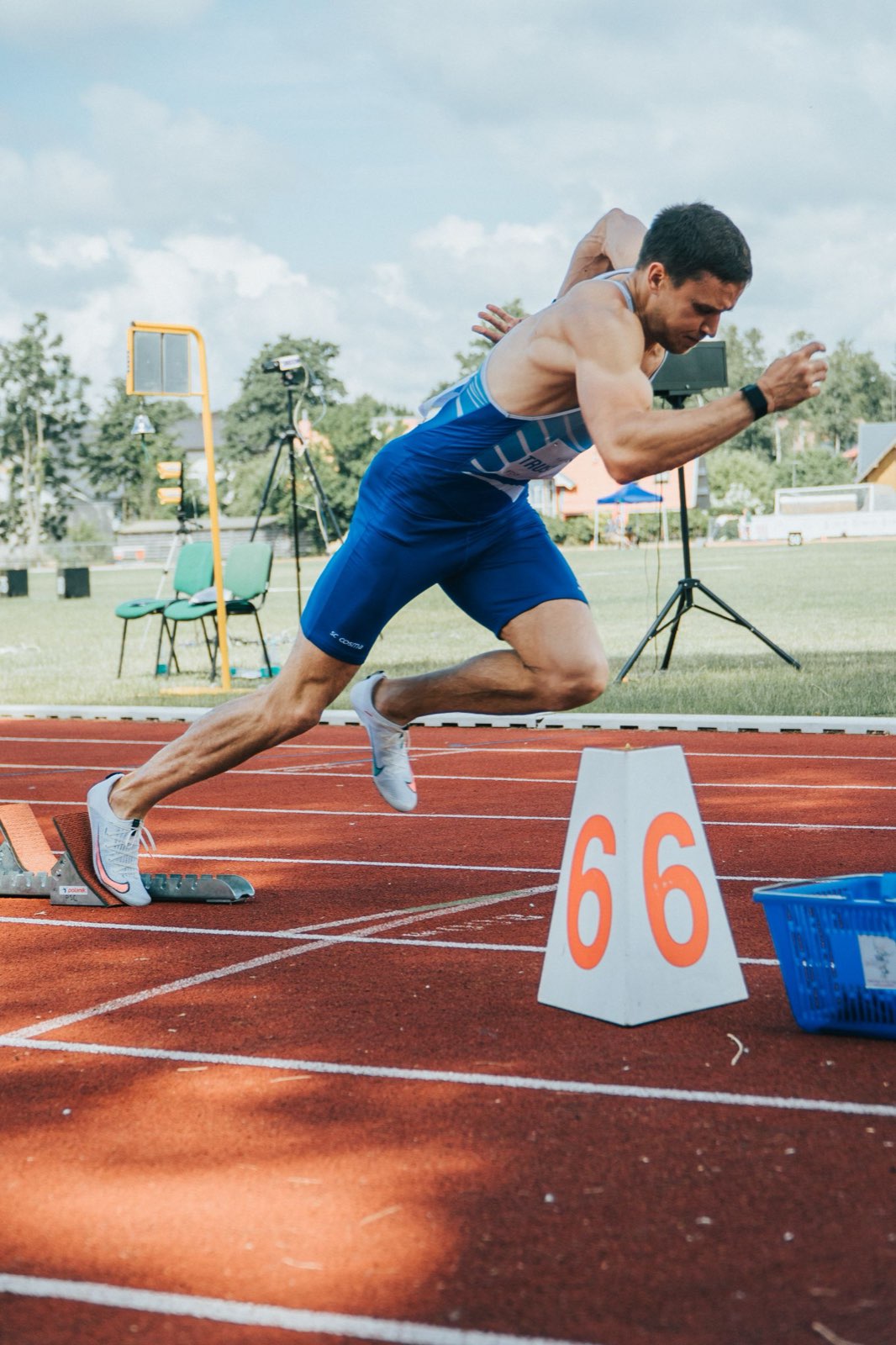
- Go: drive hard off both legs into full extension, punch the back arm forward, and strike the first step down under your body, not out in front.
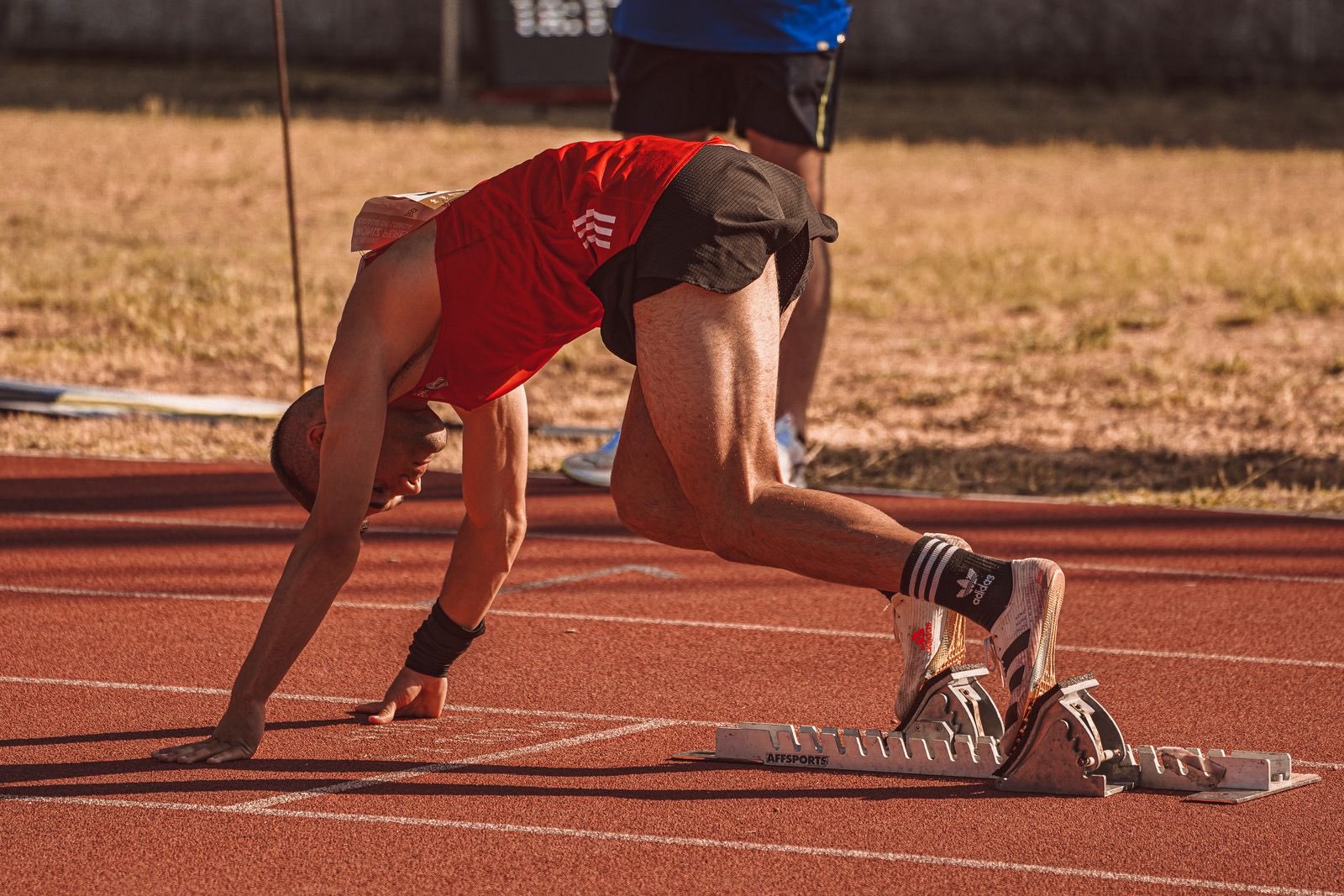
How to do a 4-point start
Set up exactly like the 3-point start, then place both hands on the ground just behind the line, about shoulder-width apart, with the shoulders over the hands. Lift the hips just above the shoulders, as in a block start set position. It is the most stable crouch start, and a good way to rehearse block-start positions when blocks aren’t available.
How to do a standing start
- Stand with one foot just behind the line and the other about a foot-length behind it, feet hip-width apart.
- Bend both knees and incline your body forward, with most of your weight over the front foot.
- Hold the arm opposite your front foot forward and the other arm back.
- Push off the front foot and drive the back knee through low and fast. Don’t step backwards or straighten up first; both are common and waste time.
Which start should you use?
The lower and further forward you start, the more your first pushes can go back rather than up. That is why crouch starts are usually quicker over short distances for athletes who have practised them. A standing start is easier to repeat exactly, so it’s a good choice for beginners and for comparing tests over time, and it’s the start you’ll actually use in most team sports.
For testing, pick one and stick with it. Times from a 3-point start and a standing start aren’t comparable.
The first steps matter more than the stance
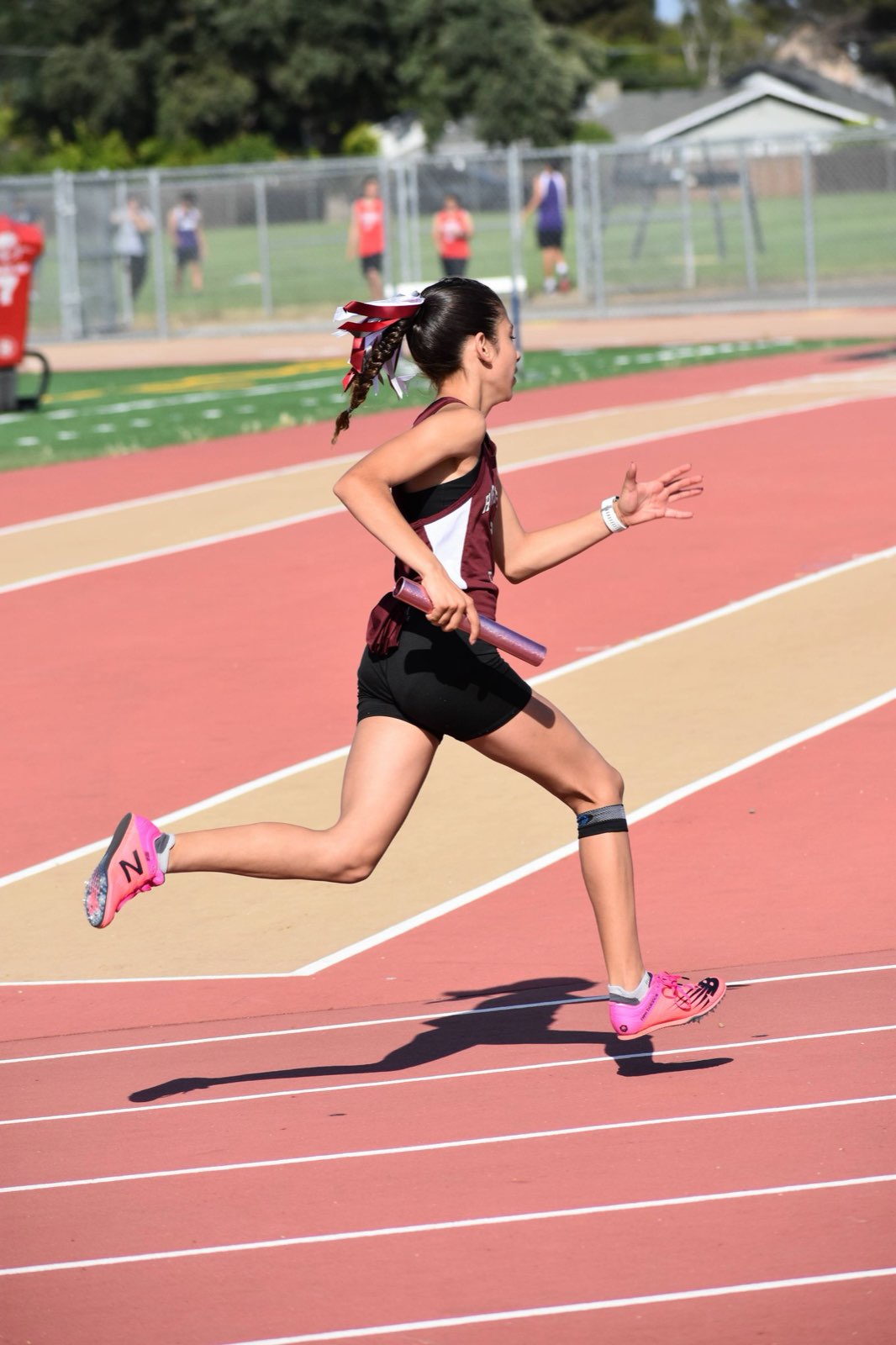
However you start, the next few steps follow the same rules as a block start’s drive phase:
- Push back, don’t reach. Each foot strikes under or slightly behind the hips and drives back into full extension.
- A straight forward lean. About 45° over the first steps, with your head, hips and pushing heel in line and no break at the waist.
- Positive shin angles at touchdown, with the knee ahead of the ankle, so the force goes back into the ground rather than up.
- Rise gradually over the first 20–30 m, not in two steps.
Common mistakes
| Mistake | Fix |
|---|---|
| Standing up straight away | Weight further forward before you go, and positive shin angles on the first steps. Cue “push the ground away”. |
| Stepping back or rocking back before going | Start with your weight already forward, so the only way to go is forward. |
| First step lands out in front | Drive the knee forward and strike the foot down under the hips. |
| Hand and leg on the same side | In a 3-point start the hand down is opposite the front foot. |
| Short, choppy first steps | Full, powerful pushes into triple extension; speed out of the start comes from force, not from moving the feet quickly. |
How to check your start
Film side-on from a few metres away, with the whole body in shot for the first five or six steps. SprintVision measures your body lean, shin angle at touchdown, and the length and timing of every step, from any start, so you can see whether you are pushing or popping up.
Sources
- Australian Athletics, “Long-term development of sprinters”: acceleration technique targets.
- “A comparison of trunk and shank angles between elite and sub-elite sprinters during sprint acceleration”, ISBS Proceedings, 2020.
Common questions
Can you do a sprint start without blocks?
Yes. A crouch start works well without blocks: a 3-point start with one hand down or a 4-point start with both hands down. A standing start is also common, especially in team sports. Blocks give you something solid to push against, but the first steps follow the same technique either way.
How do you do a 3-point start?
Stand with your feet hip-width apart, step one foot back so its toes are roughly level with the heel of the front foot, crouch so the front knee bends and the back knee rests just off the ground, then put the hand opposite your front foot on the ground just behind the line. Shift your weight forward over the hand and front leg, and drive out with a powerful push from both legs.
Is a 3-point start faster than a standing start?
For most trained athletes, a 3-point start is faster over short distances because it starts you lower and further forward, so your first pushes go back rather than up. A standing start is simpler and easier to repeat, which is why team-sport athletes often use it.
How do I stop standing up too early from a start?
Keep your weight forward over the front foot before you go, push the ground back rather than stepping forward, and let your body rise gradually over the first 10–20 m. Shins angled forward at touchdown are the key sign you are pushing, not popping up.
See your own numbers.
Film one rep on your iPhone. SprintVision measures every step and rates your positions against these targets, with a cue for anything outside the range.
 Free trial
iPhone